


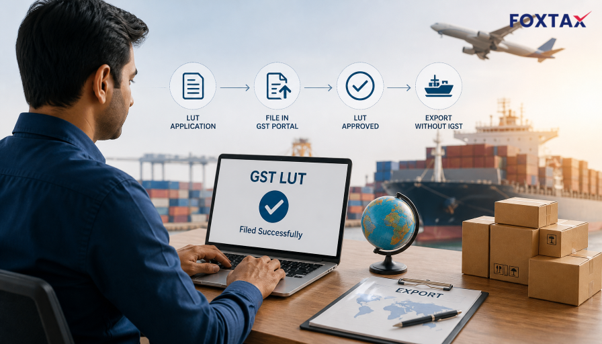
Under Indian GST, LUT filing, or Letter of Undertaking filing, is a facility granted to a registered exporter, through which he/she may export products and services from India without paying any integrated GST at the time of export.
This process has been in existence since the commencement of GST in 2017 and hasn’t changed much on the GST portal. India is a country where exports form more than 20% of the GDP, which is why this information is needed.
What Is LUT Filing Under GST?
The Letter of Undertaking is a formal document in which an exporter offers a written commitment to the GST department to fulfill all export-related requirements. Once the LOU is submitted and approved, it allows exporters to export goods without making an upfront IGST payment, thereby improving their cash flow by avoiding the blocking of funds while waiting for refunds.
Why Is LUT Important for Exporters?
The main advantage of GST LUT filing is that it allows exporters to export goods or services without paying IGST upfront. Typically, exporters are required to pay the tax first and then apply for a refund, a process that may take several weeks or months. With an LUT, this step is avoided entirely.
The validity of the LUT is for one financial year and will have to be renewed every year. It implies exporters will have to file for the LUT process in GST every financial year at the start of that financial year to keep enjoying smooth export operations.
LUT filing is made all the more simple for businesses dealing with compliance partners like Foxtax since we take care of the portal interface, documentation, and renewal reminders.
Who Is Eligible to File LUT Under GST?
Not all authorised companies can submit an LUT. There are special requirements to consider before submission to avoid wasting time and being turned down.
- Registered Exporter with Valid GSTIN: The applicant should be a registered taxpayer under GST with a valid GSTIN. This is the primary requirement for GST LUT filing.
- Not for business / authorised signatory prosecuted for Tax Evasion: This benefit is not available to a business or its authorised signatory, who has been prosecuted for any offence under the GST Act or earlier tax laws involving evasion of Rs 2.5 crore or more. Instead of LUT they should produce bonds.
- Export of goods or services: The LUT facility is intended for those involved in the export of goods or services, including zero-rated supplies made to Special Economic Zones.
- LUT Approval Requirements: Ensure all GST returns are up-to-date. If you have any pending returns or dues, then this will result in delay in LUT.
Documents Required for LUT Filing
Details required for LUT filing are very few in number, when compared to the other GST compliances. The process of submission of LUTs is made a self-service process, with only the declarations and basic information.
This is the list of documents you should have ready: the GSTIN, login credentials for the portal, authorised signatory details (including the Aadhaar and PAN), annual LUT acknowledgement in the previous year (if applicable), and answers to self-declaration tick boxes in the portal for export obligations. For assisted GST LUT filing through Foxtax, our team collects this information from you and file the LUT on your behalf.
How to File LUT in GST Portal: Step-by-Step Process
GST portal has a specific tab for LUT filing, and the entire application is done online in a matter of minutes. The process of LUT filing in GST has been the same since 2018, which is why the screen flow is the same in various LUT filing guides and tutorials. Here is the complete LUT process in GST.
Step 1 – Log In to the GST Portal
Go to the GST official site and login to your account by giving your GSTIN as username and password. In case you forgot your username or password, then click on forgot username or forgot password and recover your access to the account. Only taxpayers can login on to the GST to file LUT.
Step 2 – Navigate to the LUT Option
Once logged in, click on the Services tab and go to User Services. In this menu, click on Furnish Letter of Undertaking. This has been identified as the standard navigation path by a number of practitioners and official sources.
Step 3 – Select the Correct Financial Year
Select the financial year for which you are submitting the LUT. This is important because the LUT is valid only for the chosen year. Choosing the wrong year is a common mistake that can result in rejection or the LUT not being applicable.
Step 4 – Complete Form GST RFD-11
Enter all required information in Form GST RFD-11, the designated form for LUT submission. This includes your GSTIN, name, address, and details of the authorised signatory. Carefully review the entered details before continuing.
Step 5 – Tick Self-Declaration Checkboxes
Self-Declaration tick boxes in the form where the applicant undertakes to comply with all export obligations and conditions. These declarations are the legal heart of the LUT, binding the exporter to fulfil the promised commitments.
Step 6 – Upload Previous LUT (If Renewing)
For renewals of your LUT for a different financial year, you may be prompted to upload the LUT filed the previous year (or acknowledgement of the LUT). This is only for renewals, not initial filing.
Step 7 – Submit and Note the ARN
Once all the fields and declarations are filled, submit the form by using your Digital Signature Certificate / Electronic Verification Code.
Once a successful submission is made, you will be provided with an Application Reference Number (ARN). The ARN is your acknowledgement and can be used to view the status or download the approved LUT.
Validity and Annual Renewal of LUT
An LUT remains valid for one financial year from its approval date. Exporters are required to submit a new LUT at the start of each fiscal year to continue exporting without IGST payment. The renewal procedure is identical to the original filing, with the added option to upload the previous year’s LUT.
Consequences of Not Filing LUT
If LOU is not attached to a valid LUT, the taxpayer will have to pay IGST on export and seek refund later. This is a cash-flow hurdle and may also delay the availability of the working capital to the taxpayer. Penalty can also be levied u/s GST Act.
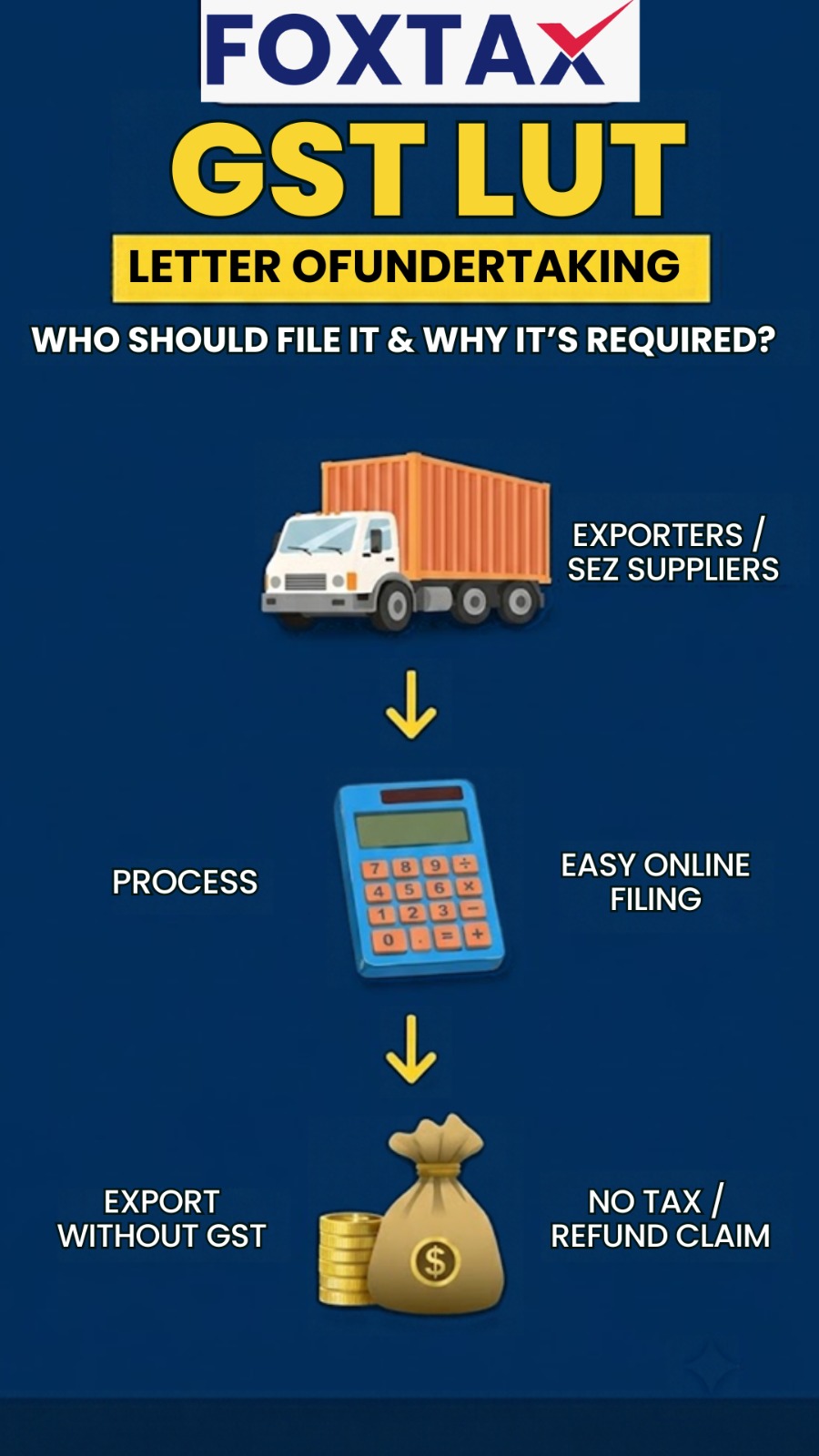
Quick Checklist for LUT Filing
- Verify eligibility and active GSTIN
- Gather authorised signatory details
- Log in to the GST portal
- Go to Services > User Services > Furnish Letter of Undertaking.
- Select the correct financial year
- Complete Form GST RFD-11
- Tick self-declaration checkboxes
- Submit with DSC or EVC and preserve the ARN.
Final Thoughts
LUT filing is an easy, yet mandatory compliance for every Indian exporter. When you go for GST LUT filing, make sure to get the file done perfectly to enjoy easy exports without any IGST blockade and maintain a steady cash flow. Foxtax has got you covered with GST LUT filing with expert assistance from checking your eligibility to annual renewal.
FAQ Section
Q1: What is the GST portal login process for LUT filing?
Tap on the official GST portal – enter the login credentials by submitting the GSTIN as the user ID and the password. Login to the account if you are a first-time user with your GSTIN to register and finish the setup. Recover the credentials if forgotten.
Q2: Can I file LUT offline?
No. The full filing of LUT is an online procedure on the GST portal.
Q3: What happens if I export without an LUT?
You must pay IGST on the value of export and then ask for a refund. It blocks working capital and puts off availability of funds.
Q4: Is LUT required for export of services?
Yes. Export of goods and export of services are subject to LUT under GST.
Q5: How can Foxtax help with LUT filing?
Foxtax helps you through end to end GST LUT filing. From determining the eligibility, to filing the form, reminders for renewal, and other compliance needs, Foxtax assists you with everything.